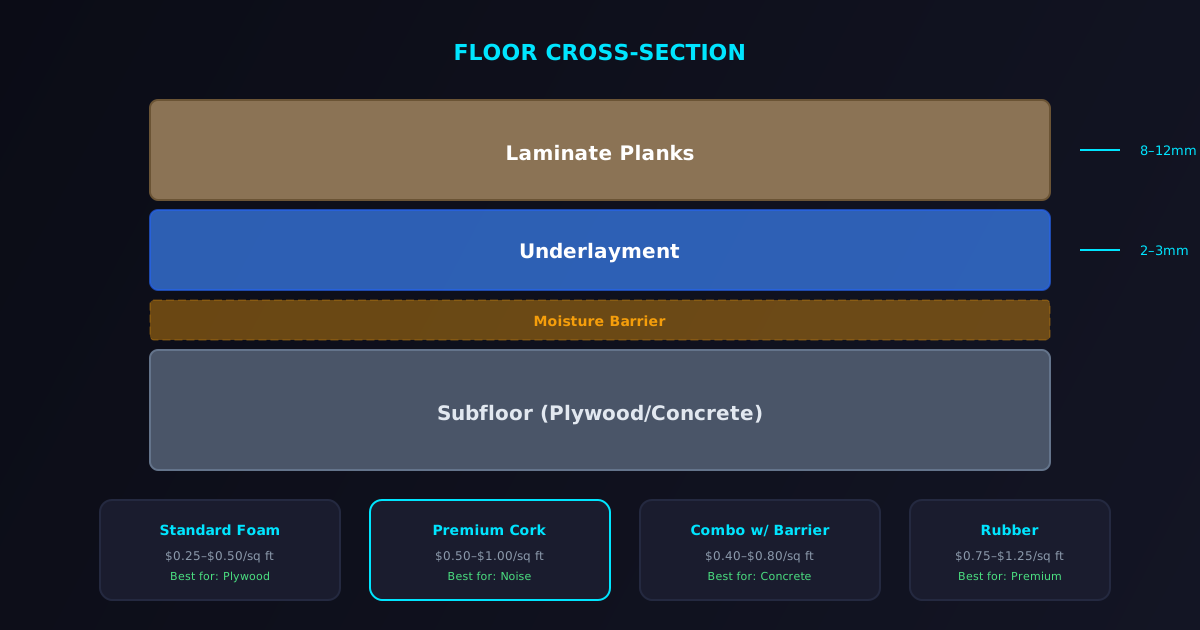
What Is Underlayment and Why Do You Need It?
Underlayment is a thin layer of material installed between your subfloor and laminate planks. It serves four critical functions: sound absorption (reduces the hollow clicking sound laminate is known for), moisture protection (prevents water vapor from reaching your planks), thermal insulation (keeps floors warmer underfoot), and cushioning (smooths minor subfloor imperfections up to 1/8 inch).
Without proper underlayment, your laminate floor will be noisy, cold, and vulnerable to moisture damage from below. The good news is that underlayment is inexpensive — typically $0.25 to $1.25 per square foot — and adds only 30 minutes to a room's installation time. It is one of the highest-ROI components of any laminate flooring project.
The 5 Types of Laminate Underlayment
1. Standard Foam (Polyethylene)
Cost: $0.20 – $0.40 per sq ft | Thickness: 2mm – 3mm
Standard foam is the most common and affordable underlayment option. It provides basic cushioning and sound absorption, making it perfectly adequate for most residential installations over plywood subfloors. The thin profile means it adds minimal height to your floor — important when matching adjacent room levels or clearing door swings.
Best for: Budget installations, plywood subfloors, low-traffic rooms
Not ideal for: Concrete subfloors (lacks moisture barrier), noise-sensitive areas
2. Foam with Attached Moisture Barrier
Cost: $0.35 – $0.65 per sq ft | Thickness: 2mm – 3mm
This is standard foam with a thin polyethylene film layer bonded to one side. The film acts as a vapor barrier that prevents ground moisture from migrating through concrete slabs and into your laminate planks. This combination product is the most popular underlayment choice because it handles both cushioning and moisture in one step.
Best for: Concrete subfloors, basements, any slab-on-grade installation
Not ideal for: Areas where maximum noise reduction is needed
3. Cork Underlayment
Cost: $0.50 – $1.00 per sq ft | Thickness: 3mm – 6mm
Cork is the premium choice for sound reduction. It provides the highest STC (Sound Transmission Class) and IIC (Impact Insulation Class) ratings of any common underlayment material. Cork naturally resists mold and mildew, provides excellent thermal insulation, and is an eco-friendly renewable material. It is the top choice for upstairs rooms, condominiums, and apartments where impact noise travels to the unit below.
Best for: Upper floors, condos/apartments, noise-sensitive environments, eco-conscious homeowners
Not ideal for: Tight budgets, direct concrete contact without added vapor barrier
4. Rubber Underlayment
Cost: $0.75 – $1.25 per sq ft | Thickness: 3mm – 6mm
Rubber provides the ultimate combination of sound dampening, cushioning, and durability. It outperforms cork in impact sound reduction and provides a luxurious, solid feel underfoot. Rubber underlayment is typically used in high-end residential and commercial installations where noise control and long-term performance are paramount.
Best for: Premium installations, commercial spaces, maximum comfort and noise control
Not ideal for: Budget-conscious projects
5. Pre-Attached Underlayment
Cost: Included in plank price (adds $0.30 – $0.60/sq ft to plank cost)
Many mid-range and premium laminate brands now come with underlayment pre-bonded to the bottom of each plank. This eliminates a separate installation step and ensures perfect underlayment coverage. Brands like Pergo Outlast+, Mohawk RevWood, and Quick-Step Impressive offer this feature. Note: you still need a separate vapor barrier on concrete subfloors, even with pre-attached padding.
Best for: DIY installers who want maximum simplicity, time-saving installations
Not ideal for: Situations requiring a specific underlayment type (e.g., maximum cork sound reduction)
Underlayment Comparison Table
| Type | Cost/sq ft | Sound | Moisture | Warmth |
|---|---|---|---|---|
| Standard Foam | $0.20–$0.40 | ★★☆ | ★☆☆ | ★★☆ |
| Foam + Barrier | $0.35–$0.65 | ★★☆ | ★★★ | ★★☆ |
| Cork | $0.50–$1.00 | ★★★ | ★★☆ | ★★★ |
| Rubber | $0.75–$1.25 | ★★★ | ★★☆ | ★★★ |
Which Underlayment for Your Subfloor?
Plywood Subfloor (Most Common)
Plywood subfloors in homes built on a raised foundation or upper stories are relatively dry and stable. Standard foam underlayment ($0.20–$0.40/sq ft) is perfectly adequate. Upgrade to cork if you are on an upper floor and want to minimize noise transmission to rooms below.
Concrete Slab
Concrete is porous and wicks moisture upward through capillary action — even concrete that appears dry can transmit enough vapor to damage laminate over time. You must use underlayment with an integrated moisture barrier or install a separate 6-mil polyethylene vapor barrier before laying standard underlayment. The combo product ($0.35–$0.65/sq ft) is the easiest solution.
Existing Vinyl or Tile
You can install laminate over existing vinyl or tile if the surface is smooth, level, and firmly adhered. Use standard foam underlayment. However, if the existing floor is on concrete, you still need a moisture barrier. Never install over carpet — it must be removed.
Installation Tips
- Never overlap underlayment seams — butt edges together and tape with underlayment seam tape. Overlapping creates bumps that telegraph through the laminate surface.
- Lay perpendicular to planks — run underlayment seams at 90° to the direction your planks will be installed. This prevents the underlayment seam from aligning with a plank seam.
- Only roll out one section at a time — laying all your underlayment at once creates a slippery surface that shifts as you walk on it during plank installation.
- Trim at walls — cut underlayment flush to the wall. It does not need to go up the wall like a moisture barrier.
- Never double up underlayment — using two layers does NOT double the sound reduction. It makes the floor too soft, causing the click-locks to flex and separate over time.
How Underlayment Affects Your Total Project Cost
For a 300 sq ft room, underlayment typically adds:
- Standard foam: $60 – $120
- Foam with moisture barrier: $105 – $195
- Cork: $150 – $300
- Rubber: $225 – $375
Use our laminate flooring cost calculator to see exactly how underlayment cost affects your total project budget. The underlayment cost field lets you input the exact per-square-foot price of your chosen type.